Cleaning Fabric Lamp Shades That Haven’t Been Touched in Years Without Destroying Them
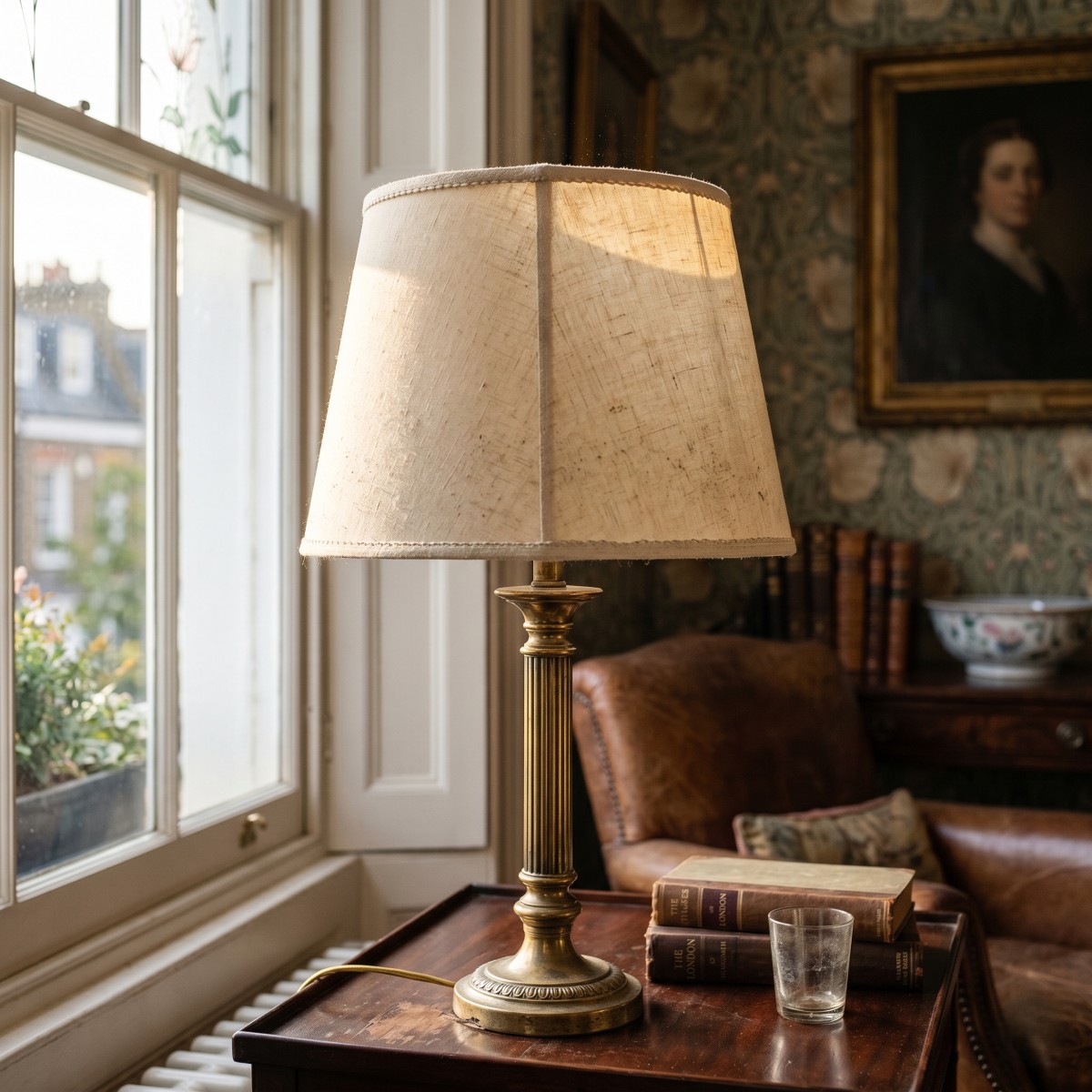
It usually happens on a Sunday afternoon, when the light falls at a particular angle and briefly illuminates everything with the unforgiving clarity of a crime scene investigation. The lamp you have lived with for years is suddenly, inescapably, visibly wrong. The shade is the colour of old newspaper. There is a furring of dust along the top edge that has achieved a kind of geological depth. And there is a yellowish tinge to the fabric that you are not entirely sure can be attributed to dust alone.
The instinct at this point – and it is an instinct that has claimed many a perfectly good lamp shade – is to take it to the sink. Do not take it to the sink. Fabric lamp shades, particularly older ones, are considerably more fragile than they appear, and the cleaning process that will restore them is almost entirely different from the one most people attempt. Here is how to do it properly, and more importantly, how to do it without making things considerably worse.
Why Fabric Lamp Shades Get Into Such a State in the First Place
Part of the answer is simply location. Lamp shades sit above natural eye level, which means they operate in a comfortable blind spot that the brain quietly edits out during the routine visual sweep of a room. Years can pass without anyone consciously registering their condition, which is how a gradual accumulation becomes a dramatic one.
The other part of the answer is heat. Traditional incandescent bulbs – and to a lesser extent halogen bulbs – radiate warmth upward into the shade, which creates a gentle but continuous convection current. This current draws dust in from the surrounding air and deposits it onto the fabric interior and exterior with quiet efficiency. The heat also has a secondary effect: it bakes the dust lightly onto the fabric fibres over time, forming a bond that is meaningfully more resistant to removal than freshly settled dust on a cold surface. The longer it has been left, the more committed that bond becomes. This is why a shade that has not been touched in several years requires a fundamentally different approach from one that is cleaned regularly.
Assess the Shade Before You Touch It
The single most important thing you can do before any cleaning begins is spend two minutes understanding what you are working with, because the type of shade and its condition determine everything that follows.
Check whether the fabric is stitched to the frame or glued. On most older and many mid-range shades, the fabric is adhered with glue – which dissolves in water with a speed and enthusiasm that will leave you with a puddle of fabric and a bare wire frame. You can usually tell by examining the top and bottom edges of the shade closely: stitched attachment will show thread; glued attachment will show a clean, slightly stiff edge where the fabric meets the trim. If you cannot tell, assume glue and proceed accordingly.
Examine the wire frame for rust, particularly at the joins. A rusty frame will transfer orange staining to damp fabric instantly and irreversibly. Check the fabric itself for moth damage – small irregular holes or a thinning of the weave that is disproportionate to the age of the piece – which is more common in natural-fibre shades in older properties than most people expect. And note the fabric type if you can identify it: silk requires the most caution, cotton and linen are more forgiving, and synthetic fabrics are generally the most robust of all.
The Golden Rule: Dry Before Damp, and Damp Before Wet
This is the principle that organises everything else, and it is worth internalising before a single tool is picked up.
Start with the driest possible intervention and only escalate if the result is insufficient. For the majority of fabric lamp shades – and for virtually all older or glued ones – dry methods alone will achieve far more than expected and carry essentially no risk of damage. Damp methods, used sparingly and with genuine restraint, address what dry methods cannot. Wet methods, meaning anything involving running water, submersion, or significant saturation, are appropriate only for a narrow category of modern, stitched, robust shades where you are certain of the construction.
“Damp” in this context means a cloth wrung out so thoroughly that it leaves no moisture on your hand when pressed against it. The moment fabric feels wet to the touch, you have gone too far, and on a glued shade you are now working against a clock before the adhesive begins to release.
The Dry Clean: Getting the Years Off Without Water
For most shades, this stage alone will produce a transformation that is quietly astonishing.
Begin with the vacuum and the softest brush attachment you own, set to the lowest possible suction. Work from the top of the shade downward in overlapping vertical strokes, holding the nozzle just above the surface rather than pressing it against the fabric – contact at higher suction can distort or pull the weave on older or more delicate materials. This removes the loose surface layer that represents the majority of the visible dust.
Follow this with a dry cleaning sponge – sold under names including Absorene and chemical dry sponge, and available from most cleaning supply stockists. This is the tool that professional cleaners reach for on delicate fabric surfaces, and it is not widely known outside the trade. The sponge works through a chemical attraction rather than friction, lifting embedded dust and light surface grime from fabric without any moisture whatsoever. Work in long, light strokes in one direction only, turning the sponge to a clean face regularly. The results on a shade that looked irretrievably grey are, the first time you use one, genuinely startling.
A lint roller makes an effective finishing pass for any remaining fibrous debris, and compressed air – the keyboard-cleaning variety – is useful for dislodging dust from trims, binding edges, and any decorative detailing that the sponge cannot reach cleanly.
Pleats, Gathers, and the Parts That Require Patience
Pleated and gathered fabric shades are in a category of their own, and there is no honest way to present cleaning them as anything other than a slow, methodical process. The upside is that the result is worth it, and that most of the work is dry.
For pleated shades, a soft-bristled watercolour paintbrush – the kind used for fine art work, not decorating – drawn carefully into each pleat is the most precise tool available. Work from the top of each pleat to the bottom in a single stroke, tapping the loosened dust downward. Follow with the dry cleaning sponge applied to the flat faces of each pleat, and the crevice tool on the vacuum – held at a careful distance – to collect what has been dislodged into the folds.
Gathered or ruched shades respond well to the soft brush attachment of the vacuum worked gently into the folds, followed by the sponge on the outer surfaces. The trim at top and bottom, where dust packs densely, benefits from a cotton bud drawn carefully along the inner edge.
Damp Treatment for Stains and Marks That Dry Methods Have Not Shifted
If dry methods have done their work and a mark or discolouration remains, the damp approach can be attempted on shades that have passed the glue and frame assessment above.
Use distilled water rather than tap water – tap water contains minerals that can leave visible tide marks on fabric as it dries, which replaces one problem with another. Add the smallest possible amount of washing-up liquid – a single drop to a cup of water – and apply with a white cloth, using a gentle dabbing motion directly onto the mark. Never rub, which spreads the stain and distorts the weave. Work from the outer edge of the mark inward, and stop the moment the fabric begins to feel more than barely damp.
Allow the area to dry completely at room temperature before assessing whether a second pass is needed. Keep the shade away from direct heat sources while drying, and ensure the wire frame is dried promptly with a separate cloth to prevent any rust transfer.
The Yellow Tinge: What Can Be Fixed and What Cannot
This is the conversation that requires the most honesty, because the yellowing on older fabric shades has two distinct causes that look similar but respond very differently to treatment.
Dust and surface soiling will lift with the dry and damp methods above, and the shade will appear noticeably lighter once they are removed. Thermal discolouration – the deeper yellowing caused by years of heat from incandescent bulbs – is a different matter. This is a change to the fabric fibres themselves rather than a surface deposit, and it cannot be reversed by cleaning. On plain white or cream cotton shades, an oxygen-based fabric brightener used extremely carefully and as a last resort can improve the appearance modestly – but on silk, pleated fabric, or anything with a glued construction, this is not a risk worth taking. Set the expectation realistically: cleaning will reveal what the shade actually is, and what the shade actually is may be a fabric that has been permanently altered by heat over many years.
Switching to LED bulbs at this point is not a consolation prize. LEDs produce virtually no upward heat, which means the cycle of thermal discolouration and dust baking stops entirely. The difference in how quickly a shade deteriorates under LED versus incandescent lighting is not marginal.
Keeping Them Clean Going Forward
The pleasant consequence of cleaning a lamp shade properly is that maintaining it subsequently requires very little effort, provided it is done with some regularity.
A monthly pass with a dry microfibre duster – the telescopic variety that requires no climbing on furniture – takes approximately twenty seconds per shade and prevents the accumulation cycle from re-establishing itself. Feather dusters, despite their photogenic qualities, redistribute more than they remove and are not the right tool here. A lint roller kept near the lamp and used briefly every few weeks is more effective than it has any right to be.
The dry cleaning sponge, used lightly every few months, addresses whatever the duster has not. And with LED bulbs doing their quiet work below, the next time a shaft of afternoon sunlight falls at a revealing angle, the story it tells about your lamp shades should be a considerably more flattering one.